What Is a Good Reaction Time in Milliseconds?
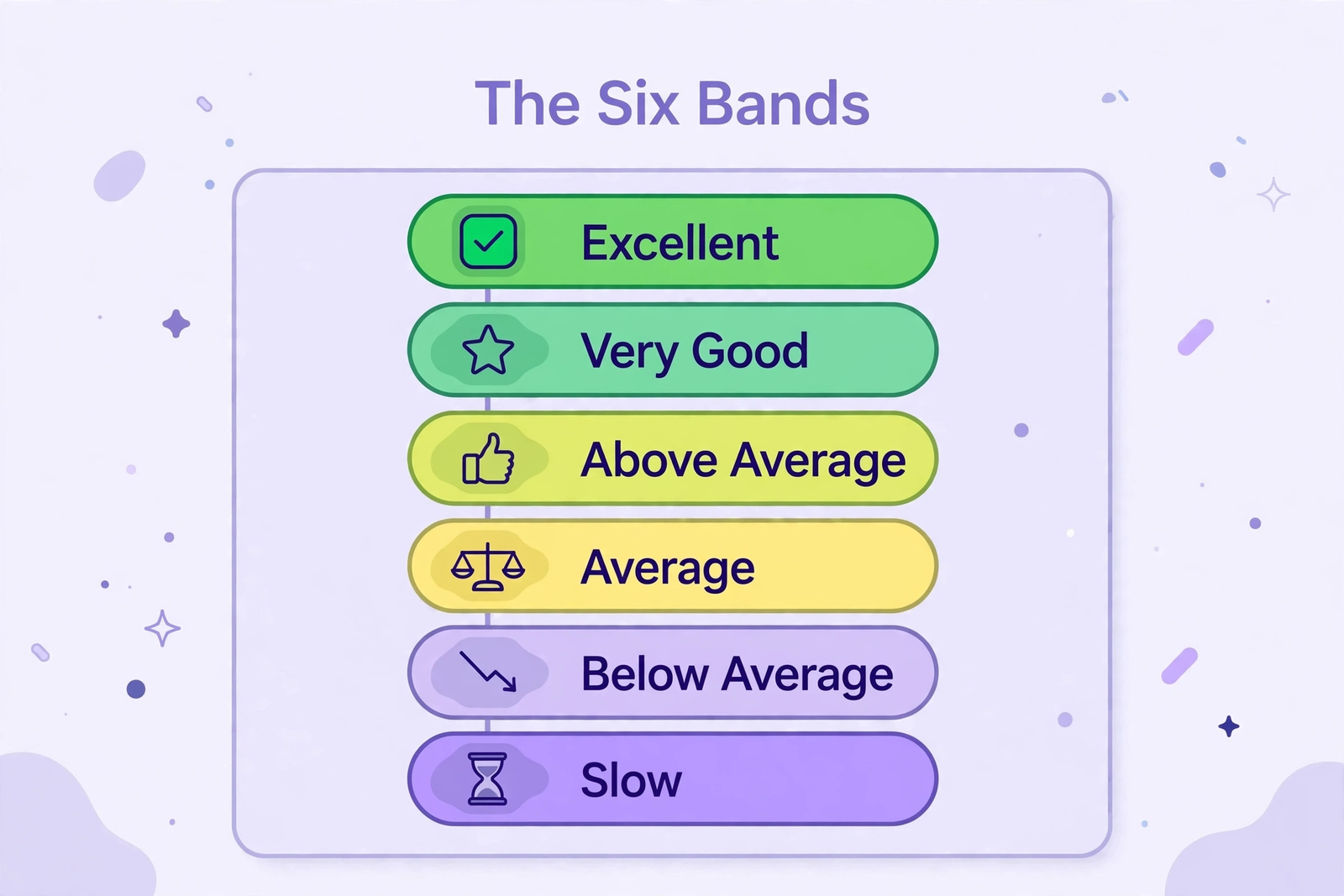
Table of Contents
- What the Bands Say About Your Score
- The Six Bands at a Glance
- A Guide, Not a Verdict
- Why One Try Is Not Enough
- Why a Score Moves Between Rounds
- Devices and Input Delay Change the Reading
- Conditions Around You Matter Too
- When a Band Changes Between Rounds
- Age and Context Change What Good Means
- Reading Your Own Score Fairly
- Good Versus Merely Fast
- Compare Only Like With Like
- Keep a Simple Record
- What a Single Score Cannot Judge
- Getting Steadier Without Chasing a Band
- Calm Practice Habits
- Talent, Familiarity, and Focus in a Score
- Set Goals Around Steadiness
- Frequently Asked Questions
- What is a good reaction time on Test Reaction's visual click test?
- Why did my reaction time band change if I felt the same?
- Is a steady middle band better than a scattered higher band?
- How can I improve consistency without chasing a faster band?
- Should I compare my Test Reaction band with scores from other tests?
Many readers finish a first round and wonder whether their score counts as good, average, or merely lucky. A millisecond number alone gives little help, because it carries no test context, no band, and no steady pattern. This article answers what is a good reaction time on this test, without overstating one number.
This guide explains what is a good reaction time in ms and why steady rounds matter most. A good score is judged against Test Reaction's own bands and your own consistent conditions, not one try. You will learn how to read your average and best result together, without overstating one number.
What the Bands Say About Your Score
The Six Bands at a Glance
On Test Reaction's visual click test, a result under 200 ms is described as Excellent. A result from 200 to 249 ms is described as Very Good in the same band system. These top bands reflect very quick responses to the green signal in that specific setup.
A result from 250 to 299 ms is described as Above Average on this test. A result from 300 to 349 ms is described as Average in the same system. These middle bands cover a wide range of ordinary, steady responses to the visual signal.
A result from 350 to 449 ms is described as Below Average in this band system. A result over 449 ms is described as Slow on Test Reaction's visual click test. These lower bands do not imply a problem, because many factors can slow a single round.
A Guide, Not a Verdict
Treat these bands as Test Reaction's own rough guide for its visual click test alone. They are not a medical standard, and they are not a universal measure of human ability. A band describes one result on one test, and it cannot judge your wider skills.
A middle band can still reflect a steady, focused round on a normal day. A lower band may simply reflect tiredness, distraction, or an unfamiliar device setup. Read the band together with steadiness, because a steady round is more trustworthy than a scattered one.
A normal reaction time on this test can still sit in a middle band on a tired day. That placement says more about the day and the setup than about lasting ability. Keep the guide in its place, and let your own steady rounds carry the real meaning.
Why One Try Is Not Enough
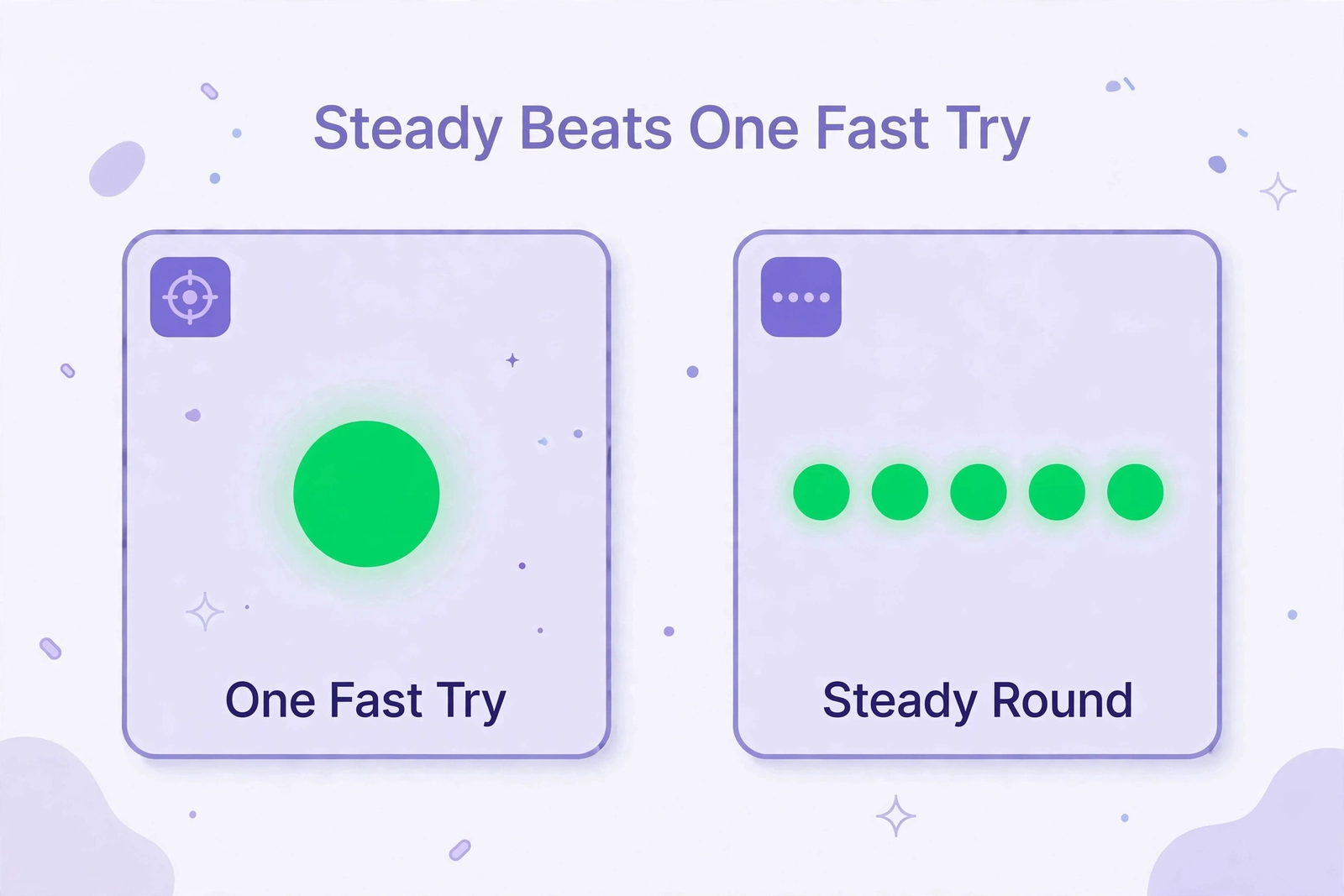
A single fast try can feel encouraging, but it shows little about your steady response pattern. Anyone can produce one fast click when focus, timing, and luck align for a moment. The next try might be much slower if attention slips or a distraction appears suddenly.
Test Reaction uses five valid tries because a set reveals more than a single moment. The average across those tries shows your typical response during that round as a whole. Your best result shows your fastest moment, but it should sit alongside the average for balance.
A fast reaction time on one try does not prove steady attention across a full round. Consistency means your tries cluster fairly close together across the set of five valid tries. A steady round suggests attention stayed focused from the first try to the last.
Why a Score Moves Between Rounds
Devices and Input Delay Change the Reading
Your device and input method shape every result, because each one adds its own small delay. A familiar mouse usually gives steadier tries than a new trackpad or an unfamiliar touchscreen. Screen and system delay also vary, so the same person can score differently on different setups.
Motor response speed stays the same, but the path from click to recording changes with hardware. That is why a band shift after a device change usually says more about setup than speed. Note any device change beside your result, so the shift can be explained fairly later.
Keep the same device for rounds you want to compare, whenever that choice is practical. A new device deserves a few calm rounds before you treat its results as comparable. Fair comparison starts with the same tools, not with chasing the same band.
Conditions Around You Matter Too
Setting and focus shape results as surely as device does, because attention is easily disturbed. A quiet room supports sustained attention across all five tries in a round. A noisy room or a busy screen invites slips that scatter tries and move bands.
Tiredness also matters, because a long day can slow responses without changing underlying ability. Rest, light, and seating all feed into how steadily you watch for the green signal. Small condition changes can cross a band boundary, even when your response speed barely changes.
Write a brief condition note beside each result, covering device, room, and tiredness. Those notes turn a puzzling band change into a simple story about setup or rest. Steady conditions do not need perfection, only enough consistency for fair comparison over time.
When a Band Changes Between Rounds
A band change between rounds does not mean your underlying speed changed sharply overnight. Check device, setting, and tiredness first, because those explain most sudden band changes. A round with steady tries in a middle band may be more reliable than a scattered higher round.
Gradual patterns across many rounds deserve more attention than any single jump between bands. A slow move across bands over time may reflect focus, rest, or familiarity with the task. Treat even a steady move as a prompt to check conditions, not as proof of lasting change.
A steady band across several rounds suggests your focus and setup stayed fairly consistent. That steadiness is worth more than one round that happens to land in a higher band. Judge the pattern, not the moment, and your bands will start to make sense.
Age and Context Change What Good Means
Age and background change results in broad ways, but this guide makes no medical claims about anyone. Younger and older readers may land in different bands without either result being unusual. Compare yourself with your own earlier rounds first, before looking at any wider group.
Context also changes what good means, because games, sports, and driving use different tasks. A click test measures one narrow response, while real tasks mix signals, choices, and movements. Do not carry a band from this test into a different task and expect it to mean the same.
If a result ever worries you, treat this guide as information only, not health advice. A click test cannot diagnose anything, and it should never replace professional guidance. Use bands for tracking your own test rounds, and leave wider judgements to proper context.
Reading Your Own Score Fairly
Good Versus Merely Fast
A good reaction time is best judged by a steady round, not by one lucky click. Fast alone can mislead, because one quick click may hide several scattered tries behind it. Good means steady and understood, with the band read beside the spread of tries.
Compare a steady middle band with a scattered higher band, and the steady one usually wins. The steady round clearly shows sustained attention across every try in that session. The scattered round may include one fast try surrounded by much slower tries.
Ask first whether the round was steady, and only then ask which band it reached. That order keeps what is a good reaction time honest, because steadiness is what makes a band trustworthy. A fast click without steadiness is a moment, while a steady round is a reference.
Compare Only Like With Like
Benchmark bands only work fairly when they belong to the test that produced the score. Test Reaction bands describe results on its own visual click test and setup. Applying those bands to a sound test or a choice task would misread the numbers involved.
Different tests produce different typical ranges, even when they all measure response speed broadly. A choice task adds decision steps, while a sound signal changes perception steps entirely. Those design differences shift numbers without changing the person being tested at all.
Keep benchmarks tied to their test, and compare only scores from that same test design. That discipline prevents unfair rankings between people who took different tests entirely. It also keeps your own progress tracking honest across rounds over time.
Keep a Simple Record
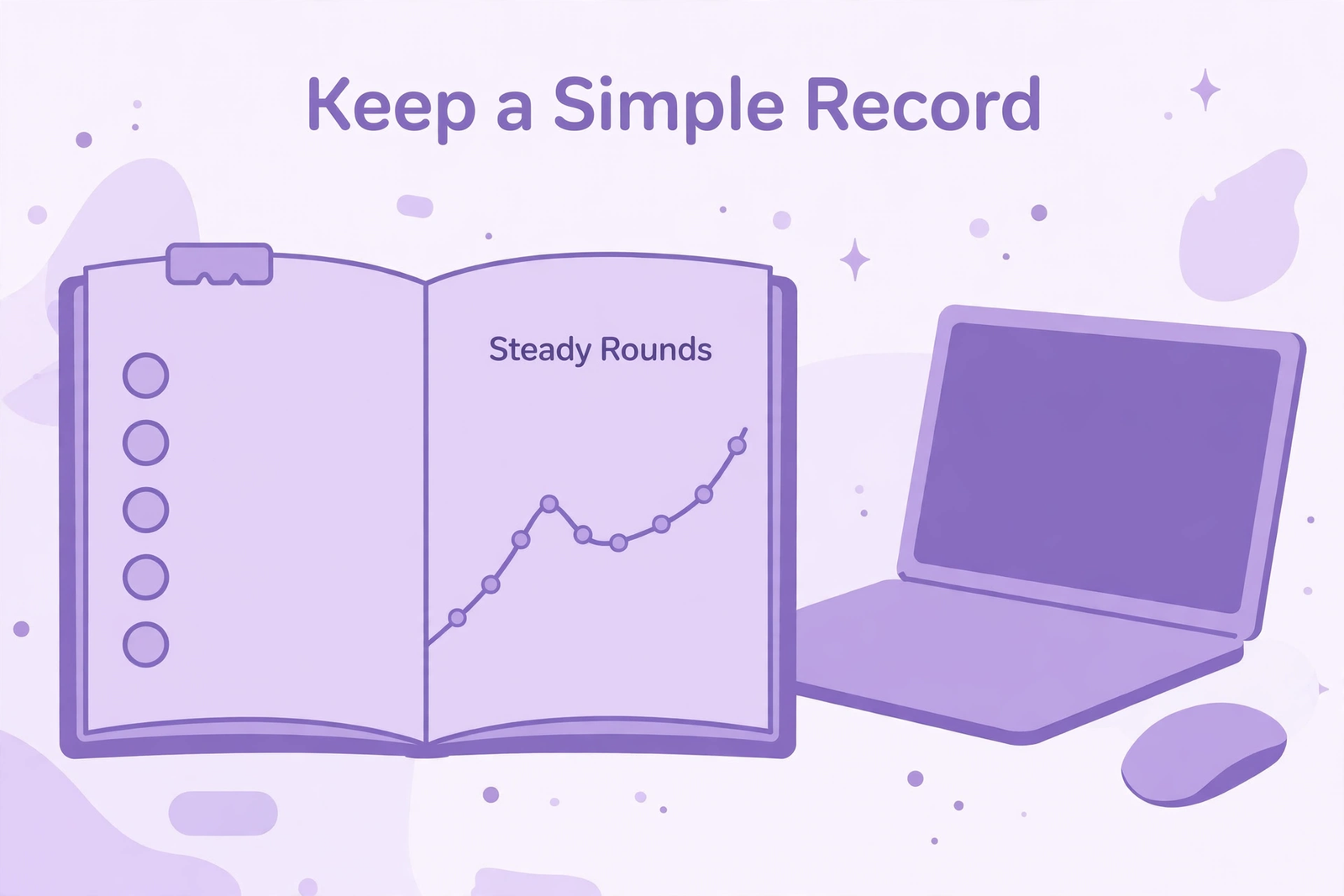
A simple record makes patterns visible, because memory alone forgets conditions and setups. Note the date, the average, the band, and a brief condition note for each round. That small habit turns weeks of numbers into a story you can actually read.
Review several rounds together, rather than reacting to the newest round in isolation. A weekly glance at averages and spreads reveals patterns that daily checking often hides. Without notes, even a clear shift can look confusing when its explanation was simple.
If progress stalls, check setup and rest before changing your practice routine drastically. If a band moved after a device change, the setup likely explains much of the shift. Patient review over weeks gives a fairer verdict than any single round could.
What a Single Score Cannot Judge
A single score cannot judge general ability, because it measures one narrow task in one moment. Intelligence, creativity, coordination, and judgement all involve skills beyond a simple click response. Reducing a person to one millisecond number would ignore that broader picture entirely.
A single score also cannot capture how you respond under varied real-world demands and choices. Real tasks involve multiple signals, decisions, and movements that a click test simplifies away. The test is useful precisely because it stays narrow, not because it covers everything.
Use a single score as a reference point for that test, not as a verdict on worth. Compare it with your own steady rounds, and check conditions before drawing conclusions. That restraint protects the score from being asked to prove more than it can.
Getting Steadier Without Chasing a Band
Calm Practice Habits
Steadier rounds often come from calm, regular practice rather than intense bursts of testing. Short focused rounds build familiarity without turning practice into pressure or fatigue. Spacing rounds apart also lets attention recover more fully between sessions.
Before each round, settle your hand position and fix your eyes on the coloured box. A consistent starting position reduces unnecessary variation between tries in the same round. Avoid guessing the signal, because too-soon clicks break the rhythm of a steady set.
After each round, review the spread of tries alongside the average and the band result. A narrowing spread over days suggests improving steadiness, even if the band stays the same. That progress matters, because consistency is what makes a good result trustworthy.
Talent, Familiarity, and Focus in a Score
A score blends several influences, not talent alone, and familiarity plays a large role. Knowing the task well lets you watch the right signal and prepare the click smoothly. A first round on an unfamiliar test often looks slower than later rounds do.
Focus also shapes scores strongly, because attention must stay on the coloured box throughout. A distracted round can scatter tries even for a person who usually responds steadily. A calm, focused round can look better without any change in underlying ability.
Separating those influences helps you read a score without overpraising or blaming yourself unfairly. Improvement after practice may reflect familiarity and focus, rather than a sudden talent change. That honest reading keeps good results meaningful and poor rounds less discouraging.
Set Goals Around Steadiness
Bands can support personal goals when you treat them as guides rather than strict targets. A useful goal might be steadier tries within your current band across several rounds. That goal values consistency, which you can influence through calm practice and steady conditions.
Avoid setting a goal that demands a top band by a fixed date or after set rounds. Such goals invite repeated retakes and guessing, which distort the very measurement you track. They also turn a simple test into pressure, which usually harms focus instead of helping it.
Review goals after several rounds, and adjust them based on patterns rather than single results. If steadiness improves while the band stays stable, that counts as genuine progress too. Calm goals keep the test enjoyable and the results worth trusting over time.
Frequently Asked Questions
What is a good reaction time on Test Reaction's visual click test?
A good result here is a steady round that sits in a band you understand clearly. Steadiness matters as much as the band, because scattered tries make any band less trustworthy. Track your own rounds on this test, and judge good by consistency plus band together.
Why did my reaction time band change if I felt the same?
A band can shift when device, setting, or tiredness changed between rounds without you noticing. A new mouse, a noisy room, or a long day can move tries enough to cross a boundary. Check your condition notes beside the result before concluding that your speed changed.
Is a steady middle band better than a scattered higher band?
A steady middle band often gives a more trustworthy reference than a scattered higher band. The steady round clearly shows sustained attention across all five tries in that session. The scattered round may hide one fast try among several much slower tries.
How can I improve consistency without chasing a faster band?
Practise calmly with short focused rounds under steady conditions each time you test. Keep your hand position, device, and setting the same, and avoid guessing the signal early. Review the spread of tries over days, because a narrowing spread shows steadiness improving gradually.
Should I compare my Test Reaction band with scores from other tests?
Do not apply Test Reaction bands to scores from tests with different signals or tasks. Other tests may use sound, choice tasks, or different counting methods that shift numbers unfairly. Keep bands tied to this visual click test, and compare only rounds from that same test.
What is a good reaction time here is therefore a steady round in a band you understand. It is not a single fast click, and it is not a universal standard for human speed. Focus on repeating the simple visual click test calmly, keeping conditions similar, and watching your own patterns over time.