Reflex Test vs Reaction Time Test: What's the Difference?
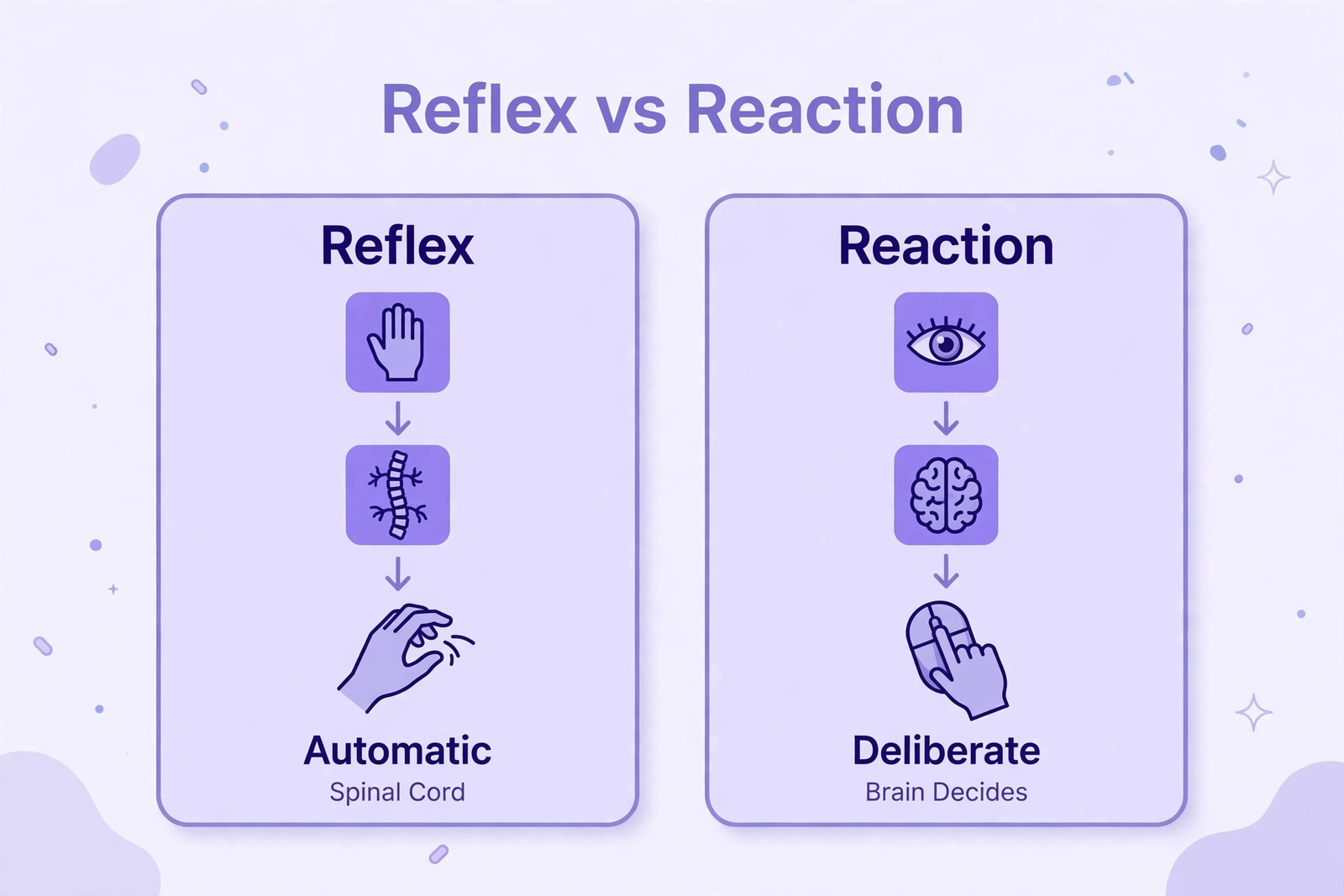
Table of Contents
- How a Reflex Works Without Thinking
- The Reflex Arc From Signal to Movement
- Why the Spinal Cord Acts So Quickly
- Everyday Reflexes You Notice Without Trying
- How a Reaction Travels Through the Brain
- From Visual Perception to Conscious Choice
- The Deliberate Reaction Chain Step by Step
- Why Attention Changes Your Reaction Result
- Why the Two Tests Look So Different
- Clinical Tests and Online Tests Compared
- How Test Design Reveals the Process
- Why Games and Sports Mostly Measure Reactions
- Reading Each Result Fairly
- Reading a Reflex Result Without Overclaiming
- Reading a Reaction Result Without Overclaiming
- Keeping the Two Words Clear in Conversation
- Choosing the Right Word for Your Result
- Frequently Asked Questions
- Is a visual click test a reflex test or a reaction time test?
- Why do people call fast gaming responses reflexes when they are reactions?
- Can practice improve a true reflex in the same way as a reaction?
- What does a reflex test result tell me that a click test cannot?
- How can I tell which process a new test actually measures?
Many people use the words reflex and reaction as if they meant exactly the same thing in everyday speech. That confusion matters when you face a test, because an automatic response and a deliberate click are measured differently. You may therefore wonder which test you actually took and what its result really describes about your own body.
This article explains the reflex arc, the deliberate reaction chain, and why their tests look so different in practice. You will learn how a stimulus travels through the nervous system and where choice enters the process. By the end, you can tell a reflex from a reaction and read results without mixing the two ideas.
How a Reflex Works Without Thinking
The Reflex Arc From Signal to Movement
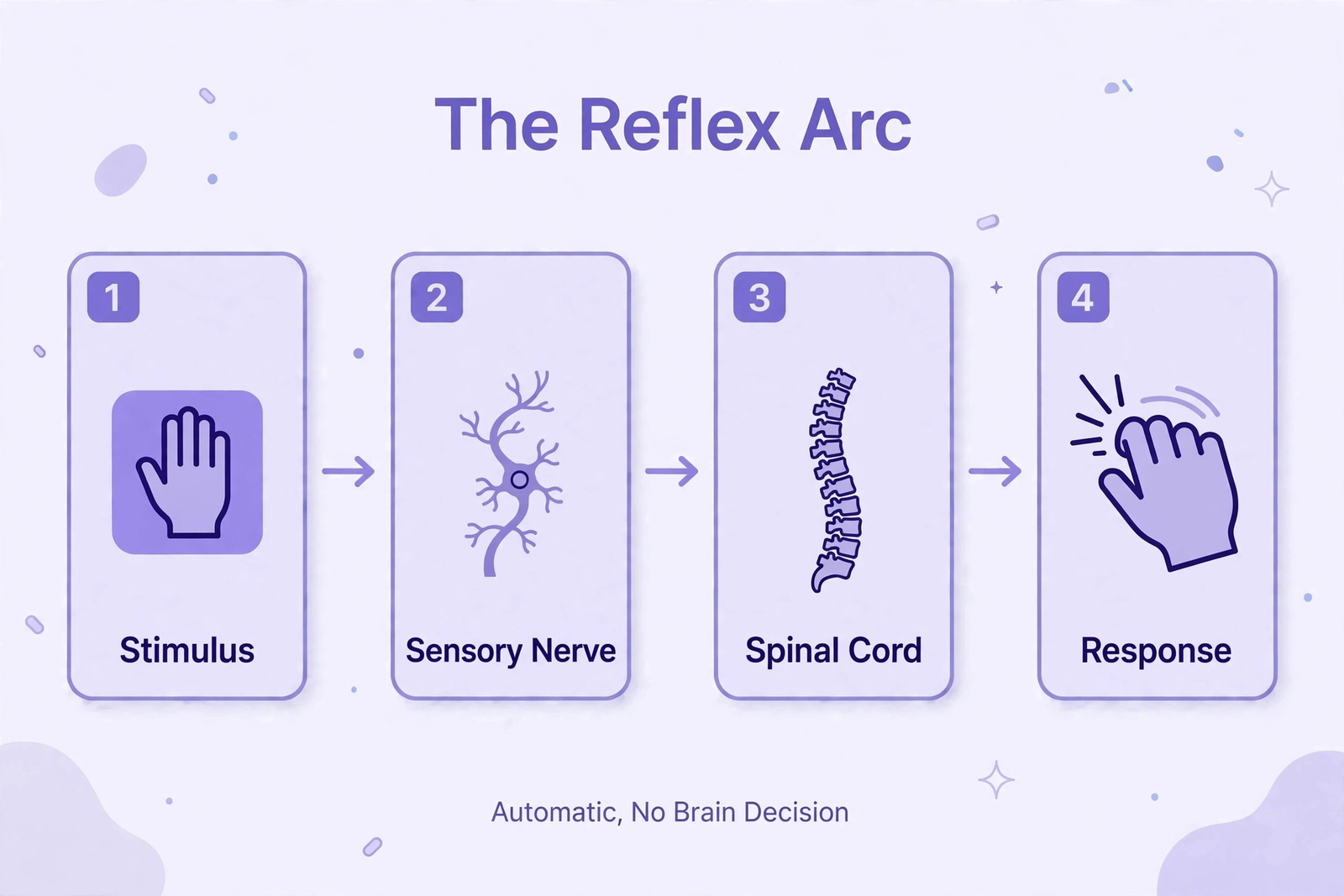
A reflex arc begins when a sensory receptor detects a stimulus, such as sudden heat or pressure. The signal travels along a sensory nerve toward the spinal cord without waiting for any conscious thought at all. That short route is what makes the response feel instant and automatic to the person who experiences it.
Inside the spinal cord, the signal passes through a simple connection that triggers a motor nerve immediately. The motor nerve then carries instructions back to a muscle, which contracts and produces movement without any delay. No decision step sits between detection and action in this protective pathway, which is why it feels so fast.
Because the route is short and direct, a reflex can protect you before you fully notice danger around you. Pulling a hand away from heat happens before careful thought could intervene usefully in that urgent moment. That speed is the point, because delay in such moments could cause greater harm to the body.
Why the Spinal Cord Acts So Quickly
The spinal cord acts quickly because it handles the reflex signal locally, without sending it to the brain first. That local handling removes several processing steps, so the muscle receives its instruction much sooner than usual. The nervous system uses this shortcut for protection, because some dangers need action before full awareness can help.
A longer route through the brain would add recognition and decision time, which would slow the protective response down. For a hot surface or a sudden threat, that extra delay could mean the difference between safety and injury. The reflex arc therefore trades flexibility for speed, which is the right trade for immediate physical protection.
Everyday Reflexes You Notice Without Trying
Blinking when something moves suddenly toward your eye is a reflex, because no decision precedes the blink at all. Your eyelid closes to protect the eye before you consciously decide to act in that brief moment. The movement is fast, automatic, and largely outside your deliberate control in that moment of surprise.
Pulling your hand back after touching something unexpectedly hot or sharp shows the same automatic protective pattern. You do not weigh options or consider consequences before moving, because the pathway runs without any deliberation. That lack of choice is what separates a reflex from a reaction, even when both responses feel very quick.
Doctors check reflexes by tapping a tendon and watching for an involuntary movement that follows the tap. The person being tested does not choose the movement, and the response appears whether they expect it or not. That involuntary quality is the key clue, because a deliberate task would always involve preparation and a choice.
How a Reaction Travels Through the Brain
From Visual Perception to Conscious Choice
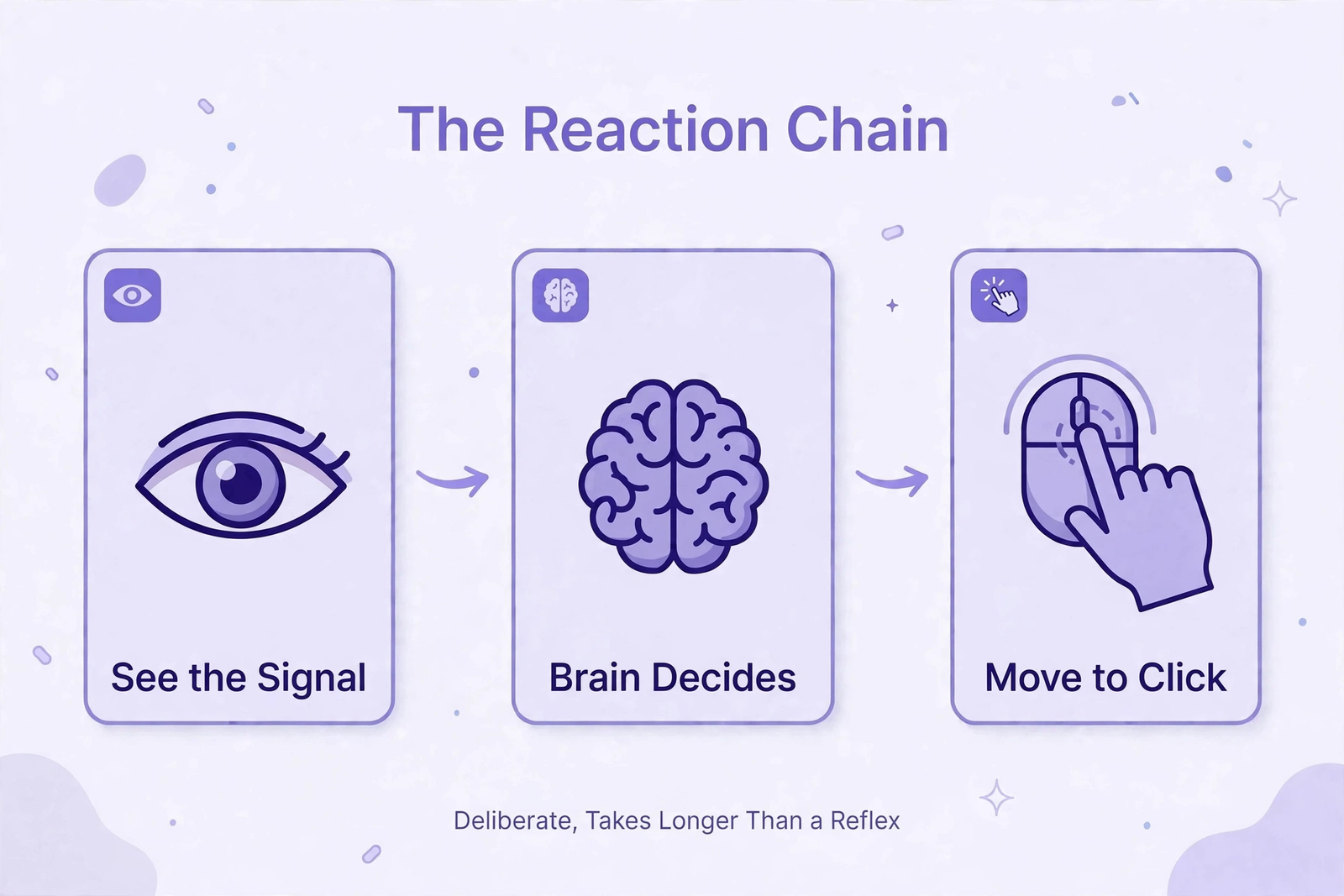
A reaction begins with a signal that you must first perceive clearly through your senses before acting on purpose. In a visual test, that signal is a colour change on the screen that you must notice first. Visual perception comes first, because you cannot respond to a change that you have not yet noticed at all.
After perception, your brain recognises the signal and links it to the task you already know you must perform. That recognition step is where conscious choice enters, because you decide that a click is the correct response now. Only after that decision does the brain send instructions for a deliberate motor response through the nervous system.
Each extra step adds a small amount of time to the chain from signal to action in a reaction. That is why a reaction feels quick, yet still slower than a true reflex arc that bypasses decision entirely. The brain step also allows flexibility, because you can choose different responses to different signals by design.
The Deliberate Reaction Chain Step by Step
A deliberate reaction chain starts with perception, as your senses register a signal like a colour change. The signal then travels to the brain, where it must be recognised and linked to a familiar task. Only after recognition does the brain send instructions for a deliberate movement of the hand or finger.
Attention, familiarity, and decision clarity can each shorten or lengthen that processing time slightly during a test. Sustained attention matters here, since distraction can delay the moment when you first notice the signal clearly. Familiarity with the task can help, because you already know what to watch for and what to do next.
The key distinction is conscious choice, even when that choice feels almost instant during a fast test round. You are deciding to click, and that decision is part of what gets measured in the final time. A reflex, by contrast, bypasses that decision entirely and moves straight to action without any deliberation at all.
Why Attention Changes Your Reaction Result
Attention shapes reaction results because a distracted mind notices signals later than a focused mind does. If your eyes wander from the screen, the colour change may already be present before you register it consciously. That late registration adds delay to the whole chain, even though your hand movement itself may be quite fast.
Tiredness has a similar effect, because a tired brain processes signals more slowly and less reliably than usual. A noisy room or a sudden interruption can break sustained attention and scatter the tries within a single round. Calm, steady focus therefore supports fairer results, because each try starts from a similar state of readiness.
Why the Two Tests Look So Different
Clinical Tests and Online Tests Compared
A reflex check usually happens during a health examination with a trained professional present in the room. The examiner applies a physical stimulus directly to your body and watches for a specific involuntary movement afterwards. You do not control when the stimulus arrives or what it will be, because the examiner decides both.
A visual click test, however, gives you a clear task and a signal that you can see. You know what to watch for, and you know that clicking is the correct deliberate response in that test. The test therefore measures a reaction, not a reflex, because preparation and choice are part of the task itself.
Searching to test your reflex online will usually lead you to reaction tasks instead of true reflex checks. That mismatch explains much of the confusion, because online tests rarely apply a sudden physical stimulus to the body. A clinical check and an online task therefore serve different purposes, and their results should never be compared directly.
How Test Design Reveals the Process
Test design reveals the process by showing whether the person controls the response or not at all. A reflex check applies a stimulus suddenly, and the examiner watches for an involuntary movement that follows it. The person being tested does not choose the movement or decide when it happens in that design.
A click test reveals a reaction by giving a clear signal and a known task beforehand to the person. You know to watch for green, and you know that clicking is the expected deliberate response in the task. The measured time therefore covers perception, recognition, decision, and movement together in one single interval.
Why Games and Sports Mostly Measure Reactions
In games, a player watches opponents, reads movement, and chooses a response under time pressure every moment. Those steps involve visual perception, cognitive processing, and a deliberate motor response every single time. Even when the action looks instant, a decision sits inside the chain from signal to movement in games.
Sports training improves reactions by sharpening perception and making familiar decisions feel smoother over time. A trained player reads the game earlier and gets ready before the decisive moment arrives in play. That readiness shortens the reaction without changing its nature, because choice remains part of the chain.
Calling game speed a reflex is understandable in casual speech, but it blurs an important distinction for readers. The skill being trained is mostly deliberate reaction, built on attention and pattern recognition over many sessions. Clear terms help players understand what practice actually improves over time, which is reaction rather than reflex.
Reading Each Result Fairly
Reading a Reflex Result Without Overclaiming
A reflex result is usually described in simple terms, such as present, reduced, or unusually strong in examination. A professional reads that description alongside other examination findings, not as a standalone score on its own. One isolated reflex finding rarely tells a complete story about nervous system health in any reliable way.
Do not compare a reflex result with a millisecond click score, because they measure different processes entirely. A click score describes deliberate speed on a screen task, while a reflex finding describes an automatic pathway instead. Placing them side by side would mix two different kinds of information unfairly for any reader.
If a reflex check raises a question, a trained professional is the right person to interpret it for you. They can repeat the check, examine related pathways, and place the finding in its proper clinical context. Home click tests cannot replace that clinical judgement in any way, because they measure a different process.
Reading a Reaction Result Without Overclaiming
A reaction result in milliseconds describes response speed on one specific screen task under specific conditions only. It reflects perception, cognitive processing, and motor response working together during that round of testing. It does not describe reflex pathways, general intelligence, or broader physical ability in any sense.
Read the average across five valid tries before judging a round, because one try can mislead you easily. A steady set of tries gives a clearer reference than a single fast or slow click alone ever could. Conditions such as device, setting, and focus also shape the number you see at the end of a round.
Use reaction results mainly as a personal reference point when you track your own rounds over time. Similar conditions make comparisons fairer, while changed conditions explain many apparent shifts between rounds. That personal tracking use keeps the score honest and genuinely useful for you over many rounds.
Keeping the Two Words Clear in Conversation
Clear language starts with naming the process you actually mean in each sentence you write or speak. Say reflex when you mean an automatic response without a decision step involved in the movement. Say reaction when you mean a deliberate response that follows perception and choice in a task.
In casual conversation, people may still say reflexes when they mean quick reactions in games or sports. You can understand their meaning without correcting every remark pedantically in everyday talk with friends. In articles, tests, and results, however, precise terms prevent confusion about what was actually measured there.
Choosing the Right Word for Your Result
Before you describe a result, ask whether a decision was involved or whether movement happened without any choice. If a decision was involved, call it a reaction, because that word matches the process you actually measured. If movement happened without choice, call it a reflex, because that word matches the reflex arc involved.
That simple check prevents most mix-ups, because it forces you to match the word to the process itself. It also helps listeners understand your result, because they will know whether choice was part of it. Use that check every time, and the two words will stay clear in your writing and your conversation.
Frequently Asked Questions
Is a visual click test a reflex test or a reaction time test?
A visual click test is a reaction time test, not a reflex test in the strict sense. You perceive the colour change, recognise its meaning, and deliberately decide to click in response to it. A reflex test instead checks an automatic response that bypasses conscious decision entirely in the body.
Why do people call fast gaming responses reflexes when they are reactions?
Casual language often uses reflexes as a loose word for any very quick response in games or sports. Most gaming responses involve seeing an opponent, choosing an action, and then moving deliberately in response. People say fast reflexes in casual speech, but that phrase describes a reaction, not a true reflex pathway.
Can practice improve a true reflex in the same way as a reaction?
Practice improves reactions mainly by sharpening perception and making familiar decisions feel smoother over time. A true reflex follows a short automatic pathway that does not involve decisions at all in the body. General health can affect how a reflex appears, but thinking harder does not reshape the pathway itself.
What does a reflex test result tell me that a click test cannot?
A reflex test result describes whether an automatic pathway responds as expected during an examination by a professional. That finding belongs in a broader clinical assessment, because one isolated result rarely tells a complete story alone. A click test cannot describe that pathway, because it measures a deliberate screen response instead of an automatic one.
How can I tell which process a new test actually measures?
Check whether the test gives you a known signal and a deliberate task that you must perform on purpose. If you prepare, watch, and choose your response, the test measures a reaction rather than a reflex. If a stimulus arrives suddenly and movement follows without choice, the test points toward a reflex pathway instead.
Keeping the terms clear helps you read any test result with more confidence and less confusion overall. A reflex describes an automatic pathway, while a reaction describes a deliberate response to a signal. When you know which process a test measures, you can interpret its number more sensibly and fairly.