Reaction Time Test: How It Works and What Your Score Means
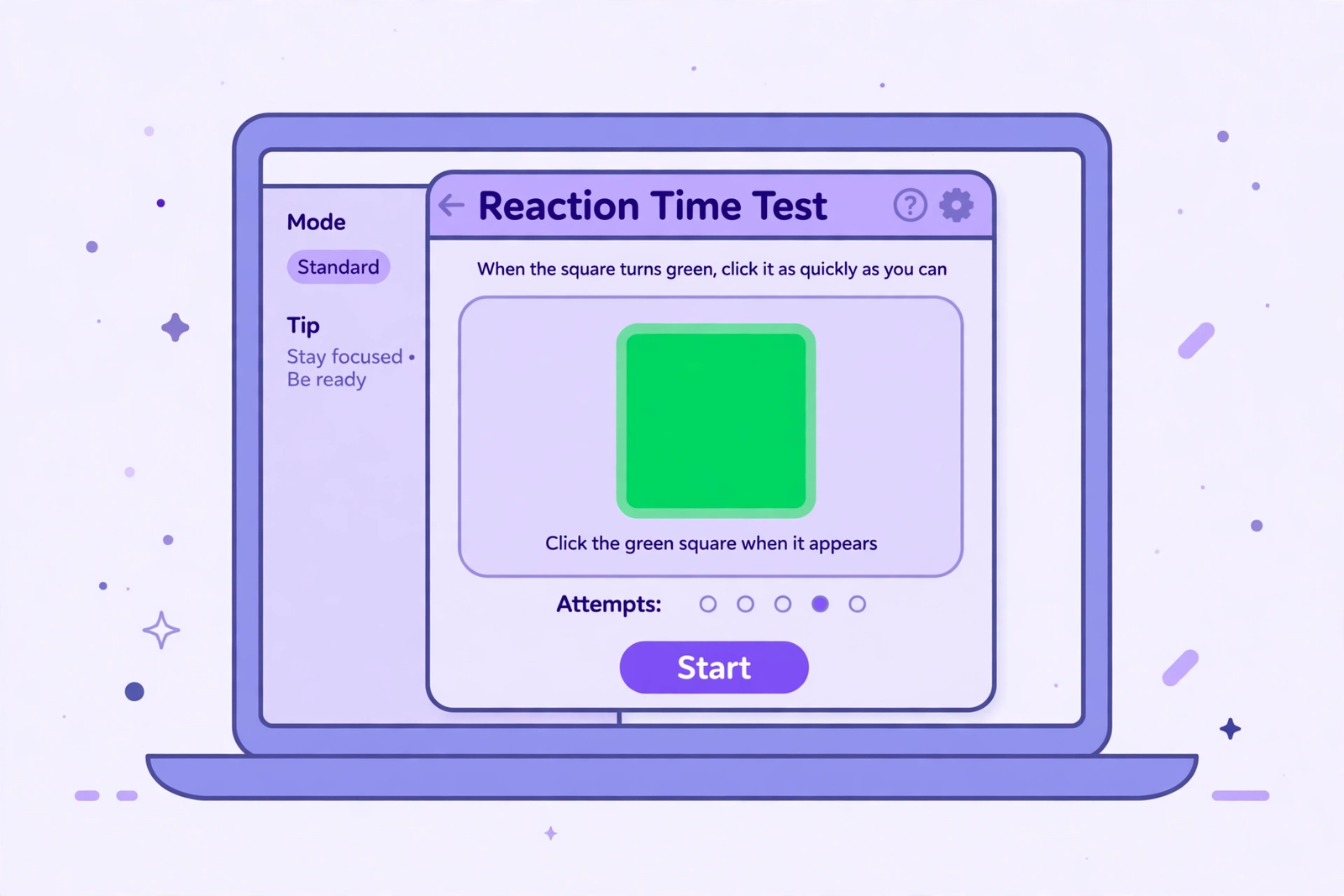
Table of Contents
- How the Visual Click Test Works
- What Happens From Signal to Click
- How a Single Try Unfolds
- Why Five Valid Tries Give a Fairer Picture
- Reading Your Average and Best Result
- What the Average Tells You
- What the Best Result Tells You
- What Your Score Cannot Tell You
- Reading Results Without Overreacting
- Getting a Fair Result at Home
- Setting Up a Fair Session
- Common Mistakes That Distort a Round
- Staying Focused Across Five Tries
- Practice, Comparison, and Sensible Retakes
- Building a Sensible Practice Habit
- Comparing Rounds Across Different Days
- When to Retake and When to Stop
- Frequently Asked Questions
- How do I read my reaction time test average and best result together?
- Why does my reaction time test score change between rounds?
- What should I do if I keep clicking too soon in a reaction time test?
- How many reaction time test rounds should I do in one day?
- Can I compare my reaction time test score with a friend's score?
You may have finished a reaction time test and stared at a millisecond score without understanding it. The number alone cannot tell you whether visual perception, cognitive processing, and motor response worked well together. That uncertainty can make a fast or slow result feel confusing instead of useful.
This guide explains how to test reaction time step by step, from the first signal to your final result. You will learn how each try unfolds and why five valid tries give a fairer picture overall. By the end, you will know how to read your average and best result with more confidence.
How the Visual Click Test Works
What Happens From Signal to Click
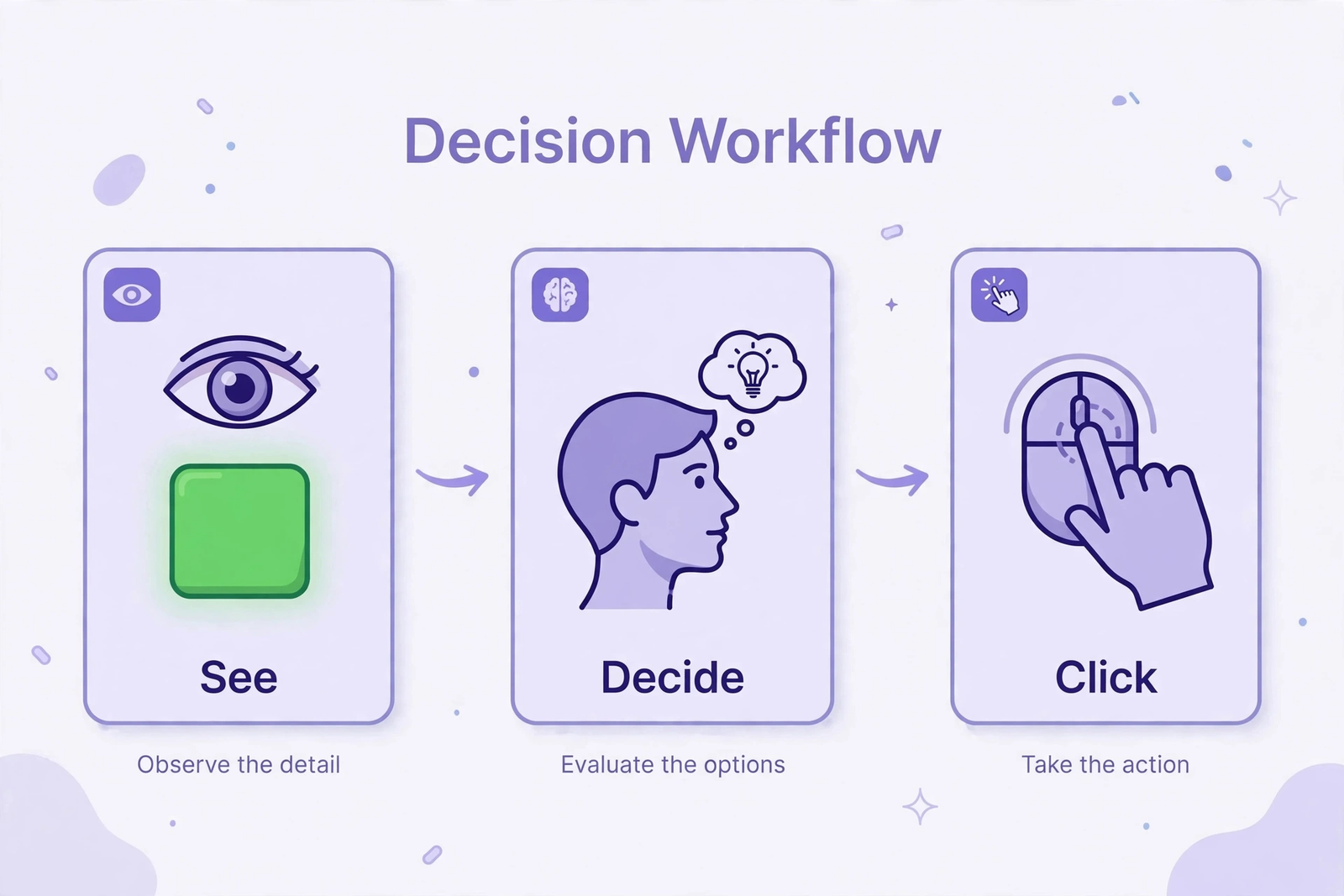
A reaction time tester measures simple reaction time, which means speed in response to one visible stimulus. Visual perception comes first, because you must notice the colour change before you can act. Cognitive processing follows, as your brain recognises the signal and decides that a click is needed.
Motor response completes the chain, as your hand moves to press the mouse button or screen. Each stage adds a small delay, so your final time reflects the whole chain working together. The test stays useful because the task never changes, even though your attention may vary slightly.
This narrow focus is a strength, because every try asks for the same action under the same rules. It does not measure intelligence, knowledge, or fitness, and it should not be read that way. It measures response speed on one task, which makes rounds easier to compare over time.
How a Single Try Unfolds
Each try begins with a waiting period, while the box stays in its starting colour. You should stay relaxed and keep sustained attention on the box rather than guessing early. Guessing the timing often leads to an early click, which cannot count as a valid try.
When the box turns green, that colour change is your clear signal to click at once. There is no choice to make about which button to press or what to do next. Your only job is to move quickly from watching the box to clicking it.
A click before the green signal is treated as too soon and is excluded from the set. That rule keeps the measurement honest, because early guessing cannot produce a false result. You then wait for a valid signal, so that the try can be recorded fairly.
Why Five Valid Tries Give a Fairer Picture
One try alone can be affected by a brief distraction, a slow movement, or a moment of hesitation. Five valid tries spread that natural variation across several attempts instead of one moment. Each valid try counts on its own, and too-soon clicks are simply left out of the set.
You continue until five proper responses have been recorded, so every round shares the same structure. That consistency makes it easier to compare one round with another round completed later. Averaging across several tries smooths out small ups and downs that happen naturally.
A single slow try will not dominate the final result when four other tries are included. A single very fast try will likewise not define the whole round on its own. The fairer picture comes from the set as a whole, not from any one click.
Reading Your Average and Best Result
What the Average Tells You
At the end of a round, the average gives one summary number for all five valid tries. It is the mean of your five tries, so it reflects your typical response across the round. If most tries were steady, the average will sit close to your usual speed for that session.
If one try was much slower than the rest, the average will shift slightly in that direction. That shift is normal, because the average must include every valid try in the set. The average is therefore the best starting point when you want to judge a whole round.
Use the average for tracking change, because it smooths out single unusual tries over time. A steady average across several rounds tells you more than any one round alone. Keep the average beside your notes on setup, so later comparisons stay fair and clear.
What the Best Result Tells You
The best result is your fastest single valid try within that same round of five. It can feel encouraging, especially when it is noticeably quicker than your overall average result. It should not be treated as your everyday speed, because it captures only one moment.
Read the best result beside the average, so you can see how steady the round was. When the two numbers sit close together, your tries were probably steady throughout the round. A wide gap between them suggests that one try differed sharply from the rest.
Neither pattern is a problem on its own, so treat both numbers as information rather than judgement. The best result shows what you achieved once, while the average shows what you did typically. Together they give a fuller picture than either number could give on its own.
What Your Score Cannot Tell You
Your score can tell you how quickly you responded during that particular round under those conditions. It can help you notice whether you felt more alert, more tired, or more distracted than usual. It can also show whether your results stay steady when you repeat the test another day.
Your score cannot tell you how you compare with other people in any scientific sense. It cannot diagnose a health condition, and it cannot predict performance in complex real-world situations. It also cannot capture factors like sleep, stress, or device differences in one number.
The most useful comparison is with your own earlier results on the same test. Repeating the test under similar conditions gives a clearer sense of change than any single round. A small shift between rounds may simply reflect focus, timing, or device setup on that day.
Reading Results Without Overreacting
A single round gives you a snapshot of one session, not a final verdict on your response speed. Look at the average first, because it summarises all five valid tries in one number. Then check the best result separately, remembering that it shows only your fastest single moment.
Compare the round with your own earlier rounds, not with a stranger's score online. Small shifts between rounds often reflect focus, tiredness, or a changed device setup. Reading results calmly helps you notice real patterns instead of chasing one unusual number.
If a round looks unusual, check the conditions first before drawing any strong conclusion. A noisy room, a different mouse, or low energy can each shift a round noticeably. Calm reading keeps the test useful, because it stops one number from misleading you.
Getting a Fair Result at Home
Setting Up a Fair Session
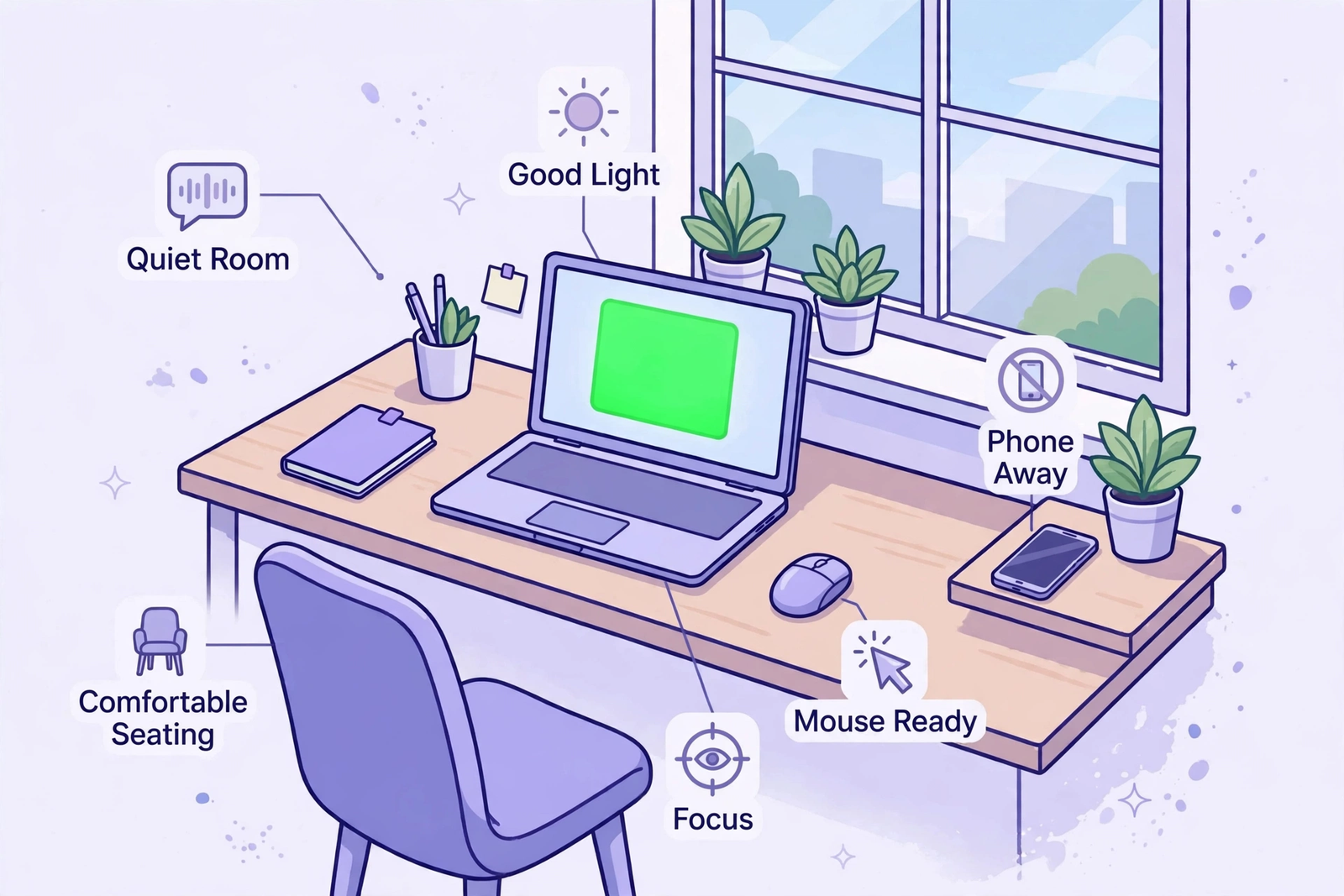
Choose a quiet moment when you are unlikely to be interrupted during the short round. Sit comfortably with your hand resting near the mouse or screen in a natural position. Keep the screen at a comfortable distance so the colour change is easy to notice.
Use the same device each time if you want rounds that can be compared fairly. Close other tabs and silence notifications, because a sudden distraction can spoil a try. Give yourself a brief pause before starting, so you begin relaxed rather than rushed.
A fair setup does not need special equipment, only consistency from one round to another. Note the device and setting beside your result if you plan to track rounds over time. Those small notes make later comparisons clearer, because you can spot changed conditions quickly.
Common Mistakes That Distort a Round
Clicking before the signal appears is the most common mistake, and it records no valid try. Trying to predict the timing often leads to too-soon clicks instead of a genuine response. Wait for the green colour itself, rather than guessing from the rhythm of previous tries.
Moving your hand away from the mouse between tries can add unnecessary delay to a click. Watching the whole screen instead of the coloured box can also delay the moment you notice. Keep your eyes on the box and your hand ready, so each try starts from the same position.
Testing while tired or distracted usually produces scattered tries that are hard to interpret fairly. If you feel unfocused, pause the round and return when your attention feels steadier again. A calm restart gives a cleaner round than pushing through five tries while your mind wanders.
Staying Focused Across Five Tries
Focus can fade across five tries, especially if you rush or feel impatient between signals. Treat each try as a fresh start, rather than carrying frustration from a previous slow click. A calm reset before each signal helps attention return to the coloured box quickly.
Keep your breathing steady and your hand still while you wait for the colour change. Tension in your shoulders or fingers can make waiting feel harder and clicking feel less smooth. Relaxed readiness usually supports steadier tries than tense anticipation or forced effort.
If attention slips midway through a round, pause briefly and refocus before the next try. A short pause costs little time and can prevent several scattered tries afterwards. Steady focus across the full set matters more than forcing speed on one try.
Practice, Comparison, and Sensible Retakes
Building a Sensible Practice Habit
Short, regular rounds work better than many rushed rounds completed in one long sitting. One or two calm rounds a day give you enough data without turning practice into pressure. Space your rounds apart, so each one reflects fresh attention rather than growing fatigue.
After each round, note the average and whether your tries felt steady or scattered overall. Over days, those notes reveal whether your focus is improving or simply varying with conditions. Practice should build familiarity with the task, not a habit of guessing the signal early.
If results stop improving, check your setup and rest before assuming your speed has changed. A familiar mouse, a quiet room, and steady attention matter more than extra rounds alone. Keep practice simple and enjoyable, so the test stays a useful personal tool.
Comparing Rounds Across Different Days
Rounds completed on different days can differ because sleep, mood, and surroundings change daily. A morning round after rest may feel sharper than an evening round after long screen use. Those daily changes are normal, and they do not mean your basic response speed has shifted suddenly.
Keep a simple record of each round, including the average and the conditions around it. Over several days, that record shows whether most rounds cluster near a similar range. A cluster tells you more than any single day, because it smooths out daily ups and downs.
When you compare days, look for gradual movement rather than one sharp jump between rounds. A gradual shift may prompt you to check sleep, rest, or device changes first. A single jump that disappears the next day probably reflects a momentary distraction instead.
When to Retake and When to Stop
Retake a round when a clear disruption affected several tries, such as a loud interruption nearby. A disrupted round reflects the interruption more than your usual response speed that day. Starting again under calmer conditions gives a cleaner and fairer set of tries.
Do not retake rounds repeatedly until you see a fast number you happen to like. Repeated retakes can turn a simple test into a chase for one lucky result. That habit also hides your typical speed behind a single unusually fast round.
Stop when you feel tired, frustrated, or unable to focus on the coloured box properly. Further rounds in that state will likely scatter, and they add little useful information. Return later with fresh attention, and your next round will be easier to interpret fairly.
Frequently Asked Questions
How do I read my reaction time test average and best result together?
Read the average first as typical speed across five valid tries in that round. Check the best result next as fastest single moment, not everyday speed. Together they show steadiness, because close values suggest a consistent round.
Why does my reaction time test score change between rounds?
Scores change because focus, tiredness, device, and setting rarely stay identical between rounds. A quiet morning round may differ from a rushed evening round for clear reasons. Compare rounds only under similar conditions, and look for patterns across several rounds.
What should I do if I keep clicking too soon in a reaction time test?
Wait for the green colour itself instead of guessing when the signal might appear next. Keep your eyes on the box and your hand ready, so waiting feels calm rather than tense. If guessing continues, pause briefly and restart when your attention feels steadier again.
How many reaction time test rounds should I do in one day?
One or two calm rounds a day give enough data without turning practice into pressure. Space rounds apart so each reflects fresh attention rather than growing fatigue. Stop when tired or frustrated, because further rounds add little useful information.
Can I compare my reaction time test score with a friend's score?
Direct comparison is unfair when devices, tests, or settings differ between two people. Your friend may use a different mouse, screen, or test design that changes results. Compare your own rounds on the same test instead, and use a friend's score only as casual interest.
Your result is best treated as a snapshot of one short session, not a final judgement. You can test your reaction time again when you feel fresh and focused, then compare rounds. Keep conditions similar where possible, so differences reflect your response rather than a changed setup.