Human Reaction Time Test: How It Works, From Signal to Response
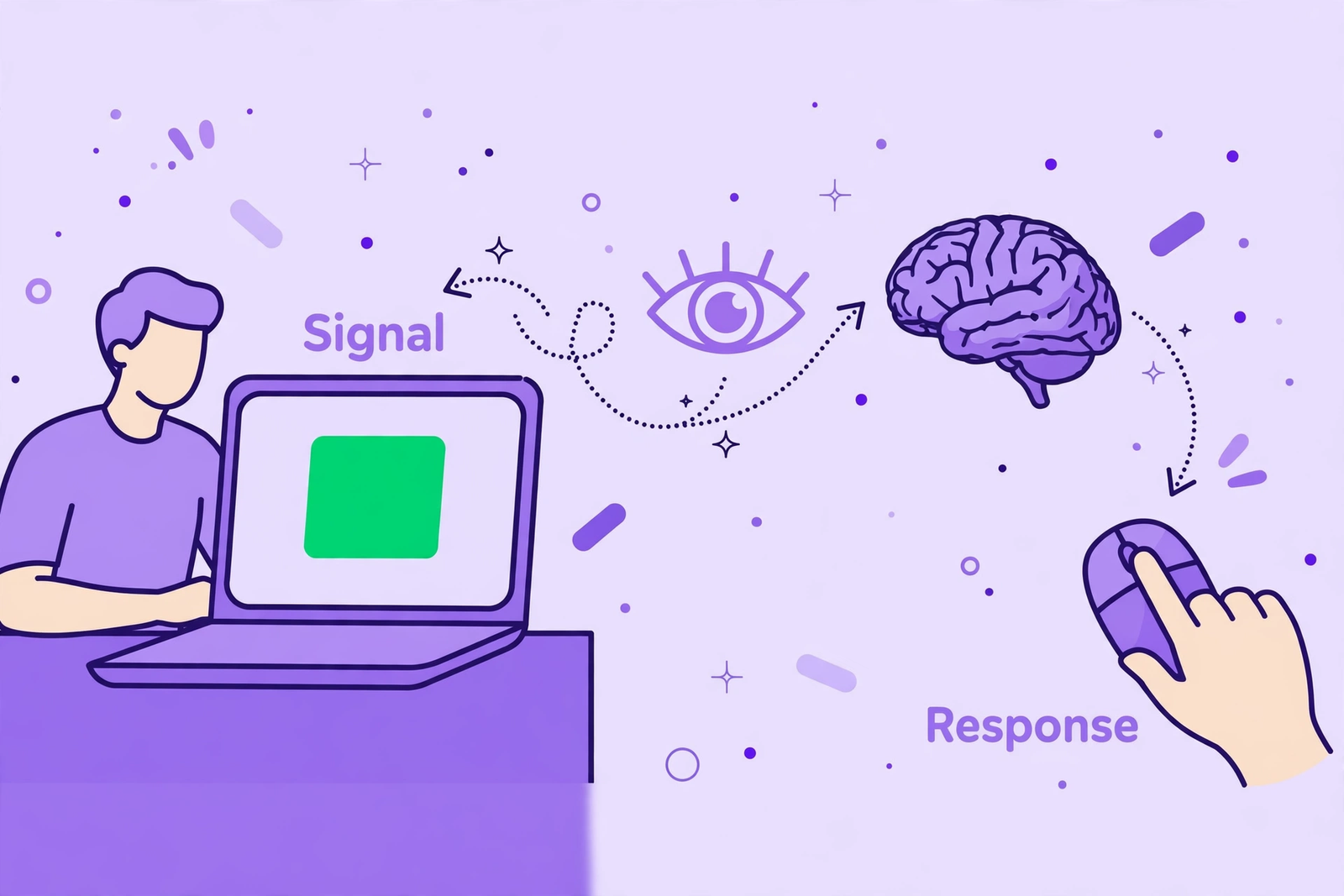
Table of Contents
- How a Signal Becomes Meaning
- A Change the Senses Can Catch
- Attention Narrows the Signal
- Sensory Nerves Carry the Signal
- Perception Gives the Signal Meaning
- How Decision and Movement Complete the Chain
- The Brain Prepares While Waiting
- The Decision Stage Links Signal to Action
- Holding Back Until the Signal Is Real
- Motor Response Carries the Decision Out
- Why the Same Chain Gives Different Results
- Fatigue Changes Each Stage
- Setting and Device Shift the Reading
- Practice Smooths the Chain
- Reading One Result Fairly
- A Snapshot of One Occasion
- Consistent Conditions for Fair Comparison
- What One Number Cannot Tell You
- Frequently Asked Questions
- What happens first in the signal-to-response chain described here?
- Why does perception matter before any decision is made?
- How does cognitive processing differ from simply noticing a signal?
- Why can motor response change a result even when noticing stays steady?
- How should I read one human reaction time test result?
You may see a reaction time result in milliseconds yet still wonder what happened between the signal and your movement. The number alone does not show which part of the chain took the time, so the result can feel unclear. That confusion is common, because noticing, deciding, and moving blend into one very brief experience.
This article follows the full signal-to-response chain, from a visible stimulus through perception and processing to movement. You will learn what each stage contributes, why sustained attention matters, and how to read a result without overstating it. People often ask how fast is the human reaction time, as if one number could settle the whole question.
How a Signal Becomes Meaning
A Change the Senses Can Catch
The chain begins when something in the environment changes in a way your senses can detect clearly. That change might be a colour shift, a light appearing, a sound starting, or an object moving suddenly. Your eyes or ears pick up the stimulus before you form any conscious plan for action at all.
Signals differ in how easy they are to notice, and that difference can change the whole experience. A bright and sudden change usually stands out more than a faint or gradual one in a busy scene. Background noise, poor lighting, and competing movement can make a signal harder to separate from everything else.
A signal must first reach your senses, because nothing else in the chain can start without that contact. Weak or cluttered signals slow the start, while a clear signal gives the later stages a fair chance. That is why test designers favour one sharp change over a scene crowded with competing movement.
Attention Narrows the Signal
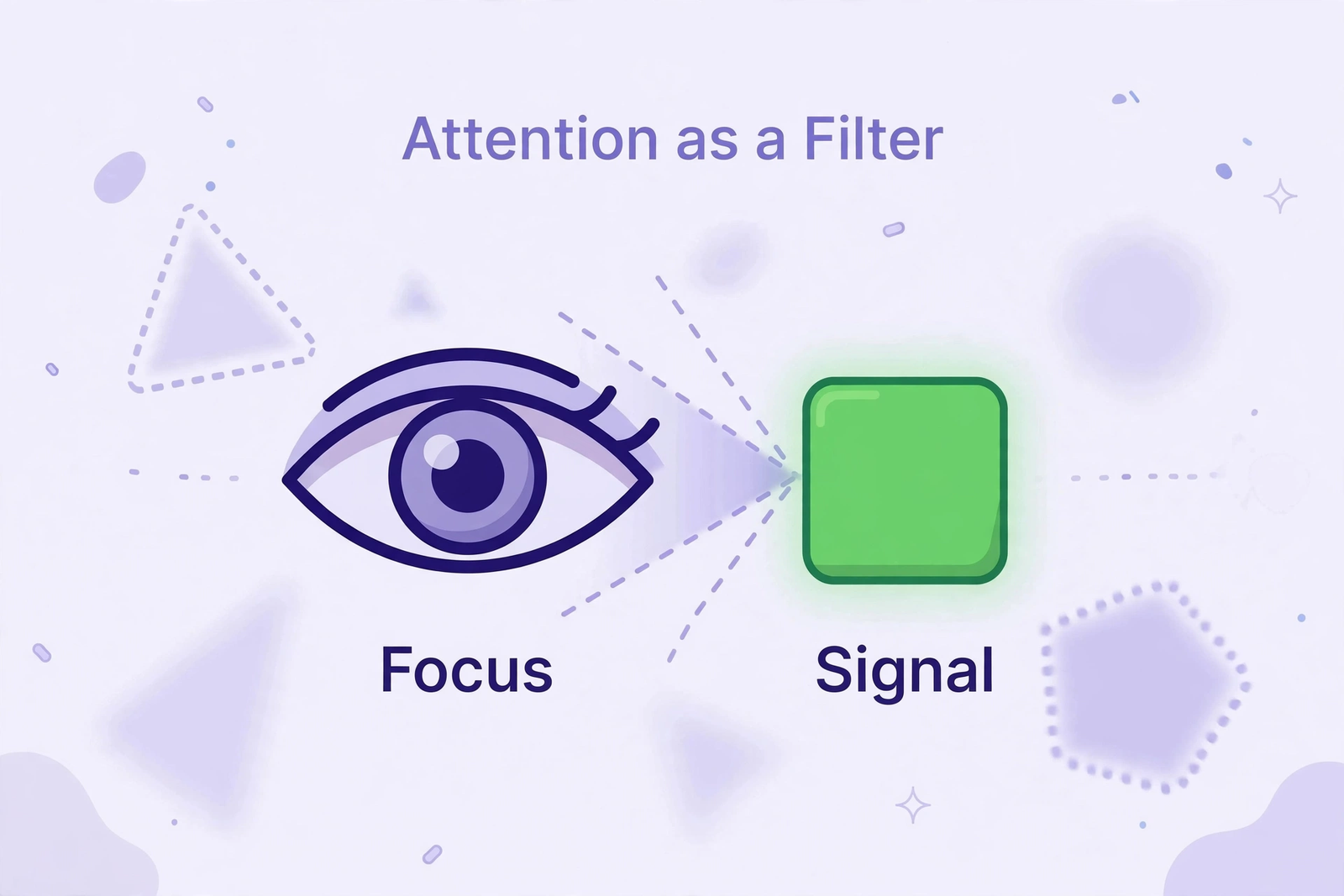
Attention works like a filter that prepares the mind before any signal appears on screen. When you expect one clear change, your senses stay ready for that change alone. That readiness shortens the noticing stage, because the mind does not search the whole scene.
A wandering mind must first return to the task before it can notice the signal at all. That return adds a small delay that belongs to attention rather than to movement itself. Strong focus therefore protects the early stage, even though it cannot remove every delay.
Attention also helps the mind ignore bright objects that are not the expected signal. Without that filtering, every movement on screen could compete for notice at once. Sustained attention keeps the filter steady across a round, so each try starts from similar readiness.
Sensory Nerves Carry the Signal
After light reaches the eyes, sensory nerves carry the change toward the brain for processing. That journey is part of the measured chain, even though you never feel it happening. A clear and strong signal travels as a distinct message rather than as vague background noise.
Different senses use different pathways, so a sound and a light do not travel identically. Visual signals pass through the eyes and visual pathways before meaning is assigned to them. That routing explains why changing the sense used can change how a task feels.
Nerve travel alone does not explain the whole result, because later stages still add time. Perception and decision follow the inward journey, and movement follows those mental stages afterward. Seeing the chain this way keeps the body and the mind together in one explanation.
Perception Gives the Signal Meaning
Once a signal is detected, visual perception gives it meaning by turning raw input into something recognisable. Your brain compares the new input with patterns you already know, such as colours, shapes, and familiar movements. A green box is not just brightness and colour; it becomes a sign that action is now expected.
Perception also filters the scene, so only the relevant change guides your next move. Many things may be visible at once, yet most of them have nothing to do with the task. Your mind gives weight to the signal that matters and sets the rest aside for the moment.
A well-designed human reaction time test keeps perception simple by using one clear visual signal. The aim is to observe the chain itself rather than confuse the person with a cluttered display. When the signal is unclear, perception alone can slow everything that follows it in the chain.
How Decision and Movement Complete the Chain
The Brain Prepares While Waiting
Waiting is not idle time, because the brain holds the rule ready while the signal is still delayed. You already know which movement belongs to the signal, so no new plan is needed. That prepared rule lets the later decision feel shorter once the signal finally appears.
Preparation also includes holding back movement, because clicking early would break the task. The mind balances readiness against restraint, waiting for proof that the signal is real. That balance is delicate, because too much eagerness can produce a click before the signal appears.
A predictable waiting rhythm can help preparation, yet guessing the exact moment still harms fairness. Good preparation means staying ready without trying to beat the signal to its appearance. When preparation is steady, each try begins from a similar mental state.
The Decision Stage Links Signal to Action
After perception, cognitive processing connects the recognised signal to the action that fits the situation. In a simple task, the decision may be as plain as moving as soon as the signal appears. In everyday life, the decision is often richer, because you must choose among several possible actions.
This mental work includes checking the signal against the rule you are following at that moment. You might need to confirm that this is the right signal, not a similar one to ignore. Cognitive processing also draws on memory, because most responses follow rules learned through earlier experience.
You know which button to press, which direction to move, or which action matches the signal. Familiar rules tend to feel quicker, because they are easier to bring to mind during the task. The decision stage is therefore the bridge between a recognised signal and a visible movement.
Holding Back Until the Signal Is Real
Holding back matters, because an early click answers a guess rather than the signal itself. A test counts only a response that follows the signal, so restraint protects the whole measurement. That rule keeps the chain honest, because anticipation alone cannot produce a fair result.
Restraint is not passivity, because the mind stays alert while the body waits for proof. Conscious awareness of the rule helps you wait, even when eagerness pushes toward an early move. When restraint holds, the measured time reflects the signal rather than a lucky guess.
Motor Response Carries the Decision Out
The final stage is the motor response, when the decision becomes visible movement in the body. Signals travel from the brain to the muscles that must act, and those muscles then carry out the movement. In a click task, this means moving a finger and pressing down at the right moment.
Motor response is not the same as the decision itself, because the body needs its own brief moment. Muscles must receive the instruction, build up force, and complete the movement in the correct direction. A longer or more awkward movement naturally takes more time than a short and practised one.
When people talk about a result in milliseconds, they usually describe this whole chain from start to finish. The number covers visual perception, cognitive processing, and motor response together as one connected sequence. That is why noticing-deciding-moving must be read as one chain, not as three separate speeds.
Why the Same Chain Gives Different Results
Fatigue Changes Each Stage
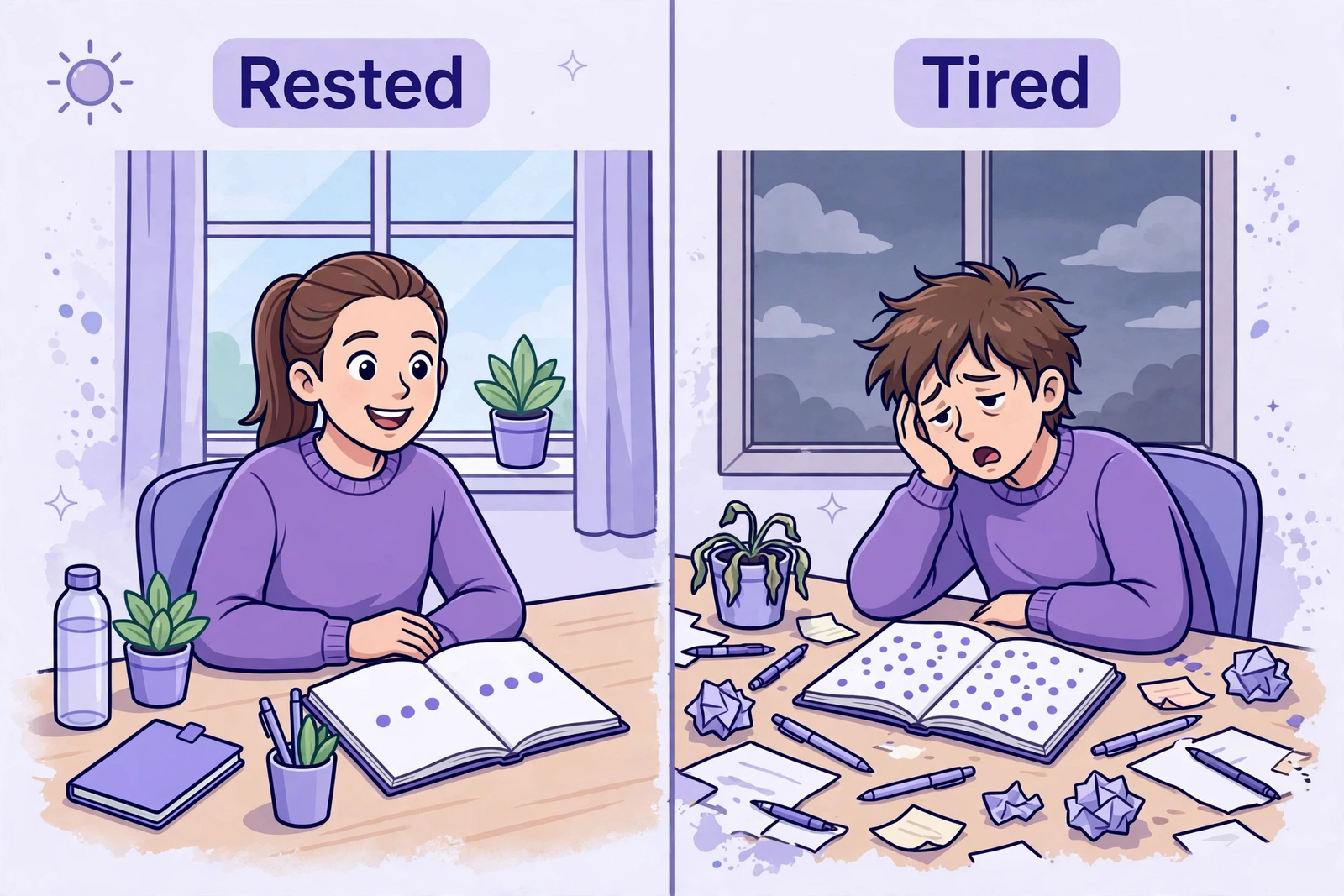
Tiredness can slow noticing, because a weary mind registers a new change less sharply. It can also slow decision, because holding a rule in mind takes more effort when tired. Movement may feel heavier as well, so the final stage adds its own small delay.
Fatigue does not affect every stage equally, which is why results can shift unevenly. One try may suffer mainly at noticing, while another try suffers mainly at movement. That uneven pattern makes a single tired result harder to interpret on its own.
Short rests between sets can restore readiness, though they do not erase all tiredness at once. Reading a tired session beside a rested session therefore needs care and clear context. The chain idea helps here, because it shows tiredness affecting the whole system together.
Setting and Device Shift the Reading
The setting around the task can add variation that has nothing to do with ability or effort. A noisy room, a glaring screen, or an uncomfortable seat can pull attention away from the signal. A delayed display or an unfamiliar device can also change how the task feels from try to try.
In a human reaction time test, a new device can shift results without any change in the person. That shift describes the setup, not a sudden change in underlying response speed. Note any device change beside the result, so a later shift has a clear explanation.
You may wonder what is the human reaction time beyond a single number on one occasion. The answer lies in the chain, because each stage can move the number a little. That is why conditions deserve a note beside every result you keep.
Practice Smooths the Chain
Practice makes familiar rules easier to recall, so decision feels less effortful during a task. The signal and response pairing becomes familiar, which reduces hesitation before movement begins. Practice does not remove stages, because noticing and movement still take their own time.
A practised hand position also helps, because the finger already rests near the control. That comfort lets movement start promptly once the decision has been made. Unfamiliar equipment can undo that comfort, even when the mental rule stays the same.
Practice is best understood as smoothing the chain, not as skipping any part of it. Each stage still happens in order, from signal through meaning and decision to movement. That order explains why a familiar task feels quicker without becoming a different task.
Reading One Result Fairly
A Snapshot of One Occasion
One result should be read as a snapshot of one chain on one occasion. A later result may differ simply because attention, setting, or readiness changed in the meantime. That variation is normal, because no two occasions share exactly the same conditions.
A single round gives you a picture of one session, not a final verdict on your response speed. Look at the whole round first, because one try alone can mislead you easily. Then check the conditions, remembering that they shape every number you see.
Consistent Conditions for Fair Comparison
Comparing two results fairly requires the same device, setting, and signal in both sessions. When conditions change, the difference may reflect the setting rather than the person alone. Holding conditions steady therefore protects the comparison from hidden sources of variation.
The same hand position and the same screen brightness help keep movement and perception steady. A quiet room also matters, because sudden noise can break attention during a single try. A human reaction time test becomes easier to compare when those conditions stay steady.
Consistency does not make a result perfect, but it makes differences easier to understand. A fair comparison asks what stayed the same before it asks what changed between sessions. That question keeps the focus on the chain rather than on a bare number alone.
What One Number Cannot Tell You
Your result cannot tell you how you compare with other people in any scientific sense. It cannot diagnose a health condition, and it cannot predict performance in complex real-world situations. It also cannot capture factors like sleep, stress, or device differences in one number.
The most useful comparison is with your own earlier results from one human reaction time test. Repeating the test under similar conditions gives a clearer sense of change over time. A small shift between rounds may simply reflect focus, timing, or device setup that day.
A visual reaction time test keeps the signal simple, so the chain itself stays in view. Read the number beside your notes on setup, so later comparisons stay fair and clear. That habit protects the result from being asked to prove more than it can.
Frequently Asked Questions
What happens first in the signal-to-response chain described here?
A change in the environment reaches your senses before any conscious plan for movement forms. The signal must be noticed and recognised before perception can give it clear meaning. Only after that early noticing can decision and movement follow in their proper order.
Why does perception matter before any decision is made?
Perception turns raw sensory input into a recognised signal that the mind can use. Without that meaning, the mind would have no clear rule to match with an action. An unclear signal therefore slows the whole chain, even when movement itself stays ready.
How does cognitive processing differ from simply noticing a signal?
Noticing registers that a change occurred, while processing links that change to an action. Processing checks the signal against the rule you are following during the task. It also holds back early movement until the signal has truly appeared in full.
Why can motor response change a result even when noticing stays steady?
Motor response adds its own time after decision, because muscles need a moment to act. Hand position and comfort therefore shape the final stage, apart from noticing itself. That is why a steady noticing stage can still sit beside a slower final stage.
How should I read one human reaction time test result?
Read one human reaction time test result as a snapshot of one chain on one occasion. Attention, setting, and readiness on that day all shaped the number you see. Later results may differ simply because those conditions changed in the meantime.
Reaction time is best understood as a short chain rather than a single instant of speed inside the body. Perception gives the signal meaning, cognitive processing links it to an action, and motor response carries that action out. When you keep those stages in mind, one human reaction time test result becomes easier to interpret fairly.